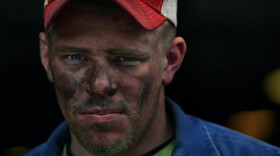
Kelly McEvers

Credit Glen Carey

Kelly McEvers is NPR's international correspondent based in Beirut, Lebanon.

Prior to moving into this reporting location in January 2012, McEvers was based at NPR's Baghdad Bureau.

In 2011, she traveled undercover to follow Arab uprisings in places where brutal crackdowns quickly followed the early euphoria of protests. While colleagues were celebrating with protesters in Egypt or rebels in Libya, McEvers was hunkered down with underground activists in Bahrain, Yemen, and Syria. She has been tear-gassed in Bahrain; she has spent a night in a tent city with a Yemeni woman who would later share the Nobel Peace Prize; and she has spent long hours with the shadowy group of anti-government rebels known as the Free Syrian Army.

In Iraq, she covered the final withdrawal of U.S. troops and the political chaos that has gripped the country since. Before arriving in Iraq in 2010, McEvers was one of the first Western correspondents to be based, full-time, in Riyadh, Saudi Arabia. She also covered Yemen and other Persian Gulf countries.

In 2008 and 2009, McEvers was part of a team that produced the award-winning "Working" series for American Public Media's business and finance show, Marketplace. She filed sound-rich profiles of a war fixer in Beirut, a smuggler in Dubai, a sex-worker in Baku, a pirate in the Strait of Malacca and a marriage broker in Vietnam.

From 2004-2006, McEvers covered the former Soviet Union for PRI's The World. She investigated the Russian military's role in the violent end to the three-day school siege by Chechen militants in the Russian town of Beslan. She was later accused of spying and detained for three days by Russian security forces near the border with Chechnya.

After 9/11, McEvers covered Indonesia, Malaysia, and Singapore for NPR and other outlets — including in-depth stories on Jemaah Islamiyah, the region's Al Qaeda-linked terrorist network that planned and executed deadly attacks at two Bali nightclubs in 2002.

McEvers was based in Phnom Penh, Cambodia from 1999-2000 for the BBC World Service. From there, she filed her first NPR story on then-emerging plans to try former members of the Khmer Rouge. She is one of the first reporters to knock on the door of Nuon Chea, the so-called "Brother No. 2" who served under Pol Pot.

Beginning her journalism career in 1997 at the Chicago Tribune, McEvers worked as a metro reporter and spent nearly a year documenting the lives of female gang members for the Sunday magazine.

In addition to NPR, her radio work has appeared on PRI/Chicago Public Radio's This American Life, NPR's Hearing Voices and On the Media, American Public Media's Weekend America, and the CBC. Her writing has appeared in The New York Times Magazine, Esquire, Foreign Policy, The New Republic, The New York Review of Books Online, The Washington Monthly, and the San Francisco Chronicle. She is a founder of Six Billion, an online magazine that was a regular feature at Harvard University's Nieman Conference on Narrative Journalism.

McEvers served as a fellow with the International Reporting Project at the Johns Hopkins University School for Advanced International Studies. She earned a master's degree from Northwestern University's Medill School of Journalism and has been a professor of journalism at universities in the U.S. and abroad. She has a bachelor's in English literature and political science from the University of Illinois at Urbana-Champaign.

Pages

Middle East
5:45 pm
Tue March 5, 2013

Syrian-American Returns To Home Country To Help Train, Arm Rebels

Originally published on Tue March 5, 2013 6:20 pm

Some Syrians living comfortably in the U.S. are understandably wracked with guilt that they can't do more to help their countrymen. Each has his own way of dealing with the situation. But now that the liberated north is easier to reach, they're starting to come back and many of them visiting parts of the country they've never seen before. We profile a Syrian-American gun enthusiast who's doing his part to arm and train the rebels.

Middle East
4:43 pm
Mon March 4, 2013

'Conscience' of Syrian Revolution Faces Challenge from Islamists

Originally published on Mon March 4, 2013 6:00 pm

Kafr Nabl is surrounded by rocky hills covered with olive and fig trees. Located in northwest Syria near the Turkish border, it used to be a sleepy town of about 30,000 people. Then it rose up against the government in early 2011. More than a year later, the town was "liberated" by anti-government rebels who forced out soldiers and police who worked for the government.

Read more
Middle East
6:06 am
Thu February 28, 2013

Syrian Army Base Blocks Rebels Plans For Idlib Province

Originally published on Thu February 28, 2013 12:04 pm

Transcript

RENEE MONTAGNE, HOST:

And it's thought that the Syrian province of Idlib, near the border with Turkey, might be the first to fall under the control of rebels. If that happens, the area could serve as a safe zone for rebel fighters and aid workers. But one key government-controlled army base is standing in the way.

NPR's Kelly McEvers just returned from Idlib, and sent this report.

KELLY MCEVERS, BYLINE: The fight for a Syrian army base called Wadi Daif started back in October, and rebels say it's still not over yet.

Read more
Iraq
6:42 am
Mon February 18, 2013

Sectarian Tensions Are On The Rise In Iraq

Originally published on Mon February 18, 2013 7:08 am

Overall violence in Iraq has gone down in recent years but lately there's been a string of attacks targeting Shiite interests and security forces. Widespread protests in Sunni areas are calling for the downfall of the Shiite-led government.

Middle East
2:46 pm
Fri February 15, 2013

Conflict Transforms Syrian English Teacher Into War Photographer

Originally published on Thu February 21, 2013 1:33 pm

Syria's war has thrown ordinary citizens into situations they never could have imagined and changed them in ways they never would have dreamed. It's turned carpenters, engineers and doctors into armed rebels. And in Aleppo, it has turned a young female teacher into a war photographer.

We first met Nour Kelze back in October, on our first trip to Aleppo. We asked her to work with us as an interpreter. She agreed but said she also would be shooting pictures.

Kelze, 25, had been teaching English and only recently became a war photographer.

Read more
The Salt
6:05 pm
Wed January 16, 2013

As Syrian Rebels Reopen Bakeries, Bread Crisis Starts To Ease

Originally published on Fri January 18, 2013 7:16 am

In Syria, the staple of most meals is a thin, round, flat bread that we would probably call pita.

Back in November, as fierce fighting raged across Syria, people started to run out of this bread. Government forces were attacking bakeries in rebel-held areas and cutting off electricity so mills couldn't grind flour. By late last year, Syrians were desperate.

Read more
Middle East
2:04 am
Wed January 16, 2013

For Those Still In Syria, A Daily Struggle

Originally published on Wed January 16, 2013 8:16 pm

The situation for Syrian refugees is getting dire. Much has been reported about the worsening conditions for hundreds of thousands of Syrians taking up shelter just outside the country's borders, but inside Syria, the numbers are even higher. The United Nations says some 2 million people have been displaced from their homes in Syria, and most of them end up squatting in mosques and schools. NPR's Kelly McEvers spent a night in one of those schools, in Syria's largest city, Aleppo, and sent this report.

Read more
The Two-Way
11:38 am
Tue January 15, 2013

In War-Torn Aleppo, Old Doors That Reflect A Grand Tradition

Originally published on Tue January 15, 2013 12:37 pm

Aleppo's storied old city, which dates to the 12th century, has suffered much in the fighting between Syrian government forces and rebels over the past few months. But parts of the city remain intact, as I saw on a recent walk through the winding, stone alleys on the way to the front line.

Centuries ago, it took Muslims from this area months in a caravan to make the pilgrimage, or hajj, to Mecca, the holiest site in Islam, which is now part of Saudi Arabia.

Read more
Middle East
4:33 am
Mon January 14, 2013

Status Report On Fighting In Aleppo, Syria

Credit Olivier Voisin / AFP/Getty Images
A rebel fighter fires toward Syrian government forces in the Bab al-Nasr district of Aleppo's Old City, earlier this month. The city has been a major battleground for the past six months.

Originally published on Mon January 14, 2013 3:27 pm

Some six months after Syria's rebels tried to storm the country's largest city, they can claim the eastern part of Aleppo and perhaps 60 percent overall. In the west, the government army has the remaining 40 percent of the city.

The line dividing these two areas is supposedly the front line in Aleppo's war. But lately the front has gone cold, as people here say in Arabic.

Read more
Middle East
5:20 pm
Tue January 8, 2013

A Welcoming Way Station For Syrians Fleeing Home

Credit Kelly McEvers / NPR
Beit Qamishlo is a modest house in southern Turkey that caters to Syrian exiles seeking temporary refuge. It also hosts frequent discussions on Syria's future. Here, Malik Dagestani (center), a former political prisoner in Syria, talks about his detention in the 1980s and 1990s.

Originally published on Tue January 8, 2013 6:37 pm

It's called Beit Qamishlo, or the House of Qamishlo. It's named after a city in northeastern Syria, though the house isn't even in Syria — it's just across the border in southern Turkey.

The house is humble, made of concrete blocks, with tile floors. Arabic slogans are taped on the walls: "Beit Qamishlo is a house for everyone," "It's a window to Syria's future," "Under one roof we plant life together and freedom."

Read more

Pages