

When first responders responded within minutes to a 911 call from Clayton Rehabilitation and Healthcare Center in Johnston County, they arrived to find that resuscitation had not yet begun. The resident was pronounced dead just over 30 minutes after the call.
At the same nursing home, a resident asked for her wound dressing to be changed after reporting pain and a foul odor. Staff allegedly declined the request. The next day, she saw maggots crawling from the pressure sore.
A resident at Wayne County’s Goldsboro Rehabilitation and Healthcare Center died after he aspirated food that had allegedly been set in front of him by a nurse aid who then left to deliver other trays. His chart noted severe cognitive delays, difficulty swallowing and the need for staff assistance for eating.
These are just a handful of cases drawn from 53 recent state inspection and complaint reports across North Carolina, where such allegations appear with unsettling regularity. In state inspection and complaint reports, the details are clinical. For families, these reports are often the first official record of injuries for their loved ones.
Read the Oct. 30, 2025, state inspection report for Clayton Rehabilitation and Healthcare Center
Read the Dec. 21, 2025, state inspection report for Goldsboro Rehabilitation and Healthcare Center
What they can do about it is far less clear.
When they do pursue legal action in North Carolina, families or loved ones must navigate overlapping legal standards, liability protections and corporate structures that can make accountability difficult to establish.
In North Carolina, many nursing home harm cases are classified as medical malpractice rather than ordinary negligence.The courts have defined malpractice as claims involving clinical judgment or professional skill, while negligence involves more straightforward acts of carelessness.
Successfully making a medical malpractice claim in North Carolina is hard, requiring plaintiffs to show that a provider breached the accepted standard of care — typically through expert testimony obtained before a case can even be filed, according to Elizabeth Todd, a Raleigh-based attorney with Todd Law Offices who specializes in nursing home abuse and negligence.
That process alone can cost thousands of dollars, creating an early barrier for families considering legal action. Even for cases that move forward, a 2011 state law limits how much plaintiffs can recover for non-economic damages such as pain and suffering. To go beyond the cap of $712,847, which was adjusted by the Office of State Budget and Management in 2026, plaintiffs have to prove both of the following:
- The plaintiff suffered disfigurement, loss of use of part of the body, permanent injury or death.
- The defendant's acts or failures, which are the proximate cause of the plaintiff's injuries, were committed in reckless disregard of the rights of others, grossly negligent, fraudulent, intentional or with malice.
The “grossly negligent” standard drew criticism back when the bill was being discussed on the Senate floor by now Gov. Josh Stein, a senator for Wake County at the time.
“Essentially for you to sustain a case of gross negligence you have to show that the doctor was drunk or was on drugs, it requires a willfulness and intentionality to have reckless disregard for patient safety,” he said.
A medical malpractice claim also comes with a time clock of three years from when the incident occurred, with a few exceptions. The result, policy experts have noted, is a system where relatively few cases are filed compared to the number of reported medical injuries.
For the cases that do move forward, legal challenges can extend well beyond filing a case.
Immunity and delay
In responses to lawsuits filed, some facilities continue to cite COVID-19 era statutes which gave them immunity from prosecution, despite the fact that the state of emergency around COVID in North Carolina expired in 2022.
North Carolina lawmakers enacted legal protections for health care providers during the pandemic. To make sure that providers weren’t unfairly penalized for issues arising as they treated the new disease, lawmakers granted immunity for acts or omissions that occurred in the course of providing care during COVID-19 called the Emergency or Disaster Treatment Protection Act as part of a COVID omnibus bill.
The National Consumer Voice, a national advocacy group, was among early critics of such immunity clauses, passed at the federal level and in multiple states in the early days of the pandemic when there were many unknowns. In a statement the group expressed concern that, “whistleblower suits brought against entities for fraud or abuse may be placed in jeopardy.”
Early challengers of the law included the family of Durham resident Palestine Howze who died, allegedly, from complications of a pressure sore. Her daughter’s suit alleged the sore had not been timely or properly treated. The case was dismissed. While the public health emergency has expired, the continuing effect of the law is unclear and the statute is still being referenced in recent court cases.
“A lot of things went on during COVID to protect systems that were falling apart to be able to cover anyone and all people about everything health-related,” said Rep. Donna White (R-Clayton), a registered nurse. “But a lot of those restraints and policies have been pulled back because they were not needed anymore.”
Nonetheless, the COVID-19 era statute was recently cited by Portopiccolo Group, a private equity firm based in New Jersey that’s linked to more than 30 North Carolina nursing homes, in their response to a lawsuit pending against one of their facilities. Portopiccolo was named in the suit, as were a subsidiary and related entities working with the company.
The case was filed in December 2025 by Michael Sabino on behalf of his sister, Francine Sabino, who was a resident of the Citadel at Myers Park from December 2019 to November 2024.
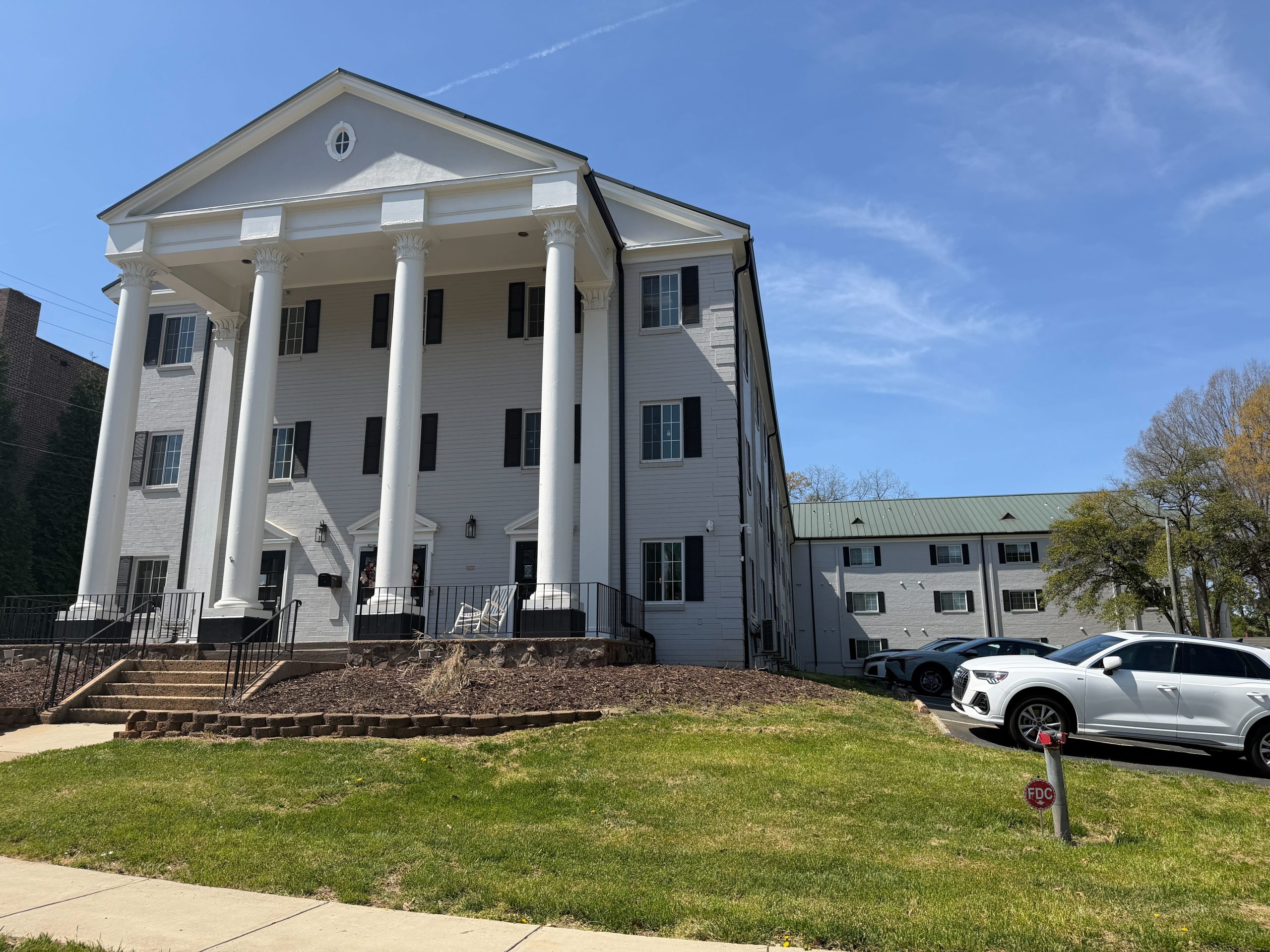
During her time at the Citadel at Myers Park, the lawsuit alleges, Francine Sabino experienced multiple urinary tract infections, a systemic infection, dehydration, a fall, contractures to both her legs, inappropriate touching by another resident, multiple skin wounds including a large right buttock abscess, a blister to the side of her left foot, a deep wound to the same foot that penetrated to the bone, serious pressure wounds to her coccyx and left thigh where it was difficult to determine degree of injury, pain, suffering and mental anguish — which the lawsuit claims severely impaired her physical functioning and quality of life and accelerated her physical decline.
The first three defenses outlined by Portopiccolo, et al, in their response to the lawsuit, point to the state’s malpractice law and the Emergency Disaster Treatment Protection Act, pleading immunity.
Additionally, Portopiccolo’s response attributed the resident’s decline to underlying conditions among the pandemic-era challenges. But the scope and severity of the complications — many considered preventable under federal care standards — raise questions about whether those outcomes were truly unavoidable.
Federal regulations require facilities to prevent pressure ulcers unless they are clinically unavoidable, a standard that requires proper staffing, regularly repositioning the patient, proper nutrition and hydration, ongoing monitoring and appropriate pressure-relieving equipment, such as special air mattresses. The Sabino lawsuit alleges most of those measures, including the necessary mattress designed to prevent pressure wounds, were not provided in the case of Francine Sabino.
While a single complication may be attributed to underlying illness, multiple conditions seen as preventable — such as dehydration developing into severe conditions — can signal broader systemic failures, according to federal regulations.
Citadel at Myers Park had been cited so frequently that federal officials deemed it a “special focus facility” numerous times over the years, making it subject to more inspections. Eventually, the facility’s consistent failure to comply with federal care standards caused it to lose its authorization to bill Medicare and Medicaid. The federal Centers for Medicare and Medicaid Services terminated its partnership with the facility on March 5, 2025, with a public notice.
The facility now operates under a different name, Myers Park Nursing Center, but with the same ownership.
Even as regulators documented repeated failures at the facility, among Portopiccolo’s defenses is one that shifts responsibility elsewhere: The company argues that if any injuries did occur, it was caused by third parties outside of its control. The defense points to a layered ownership structure. In this case, records show a broader network of entities, related to Portopiccolo, complicating who ultimately controlled staffing, resources and day-to-day care.
“These private equity groups have all the money in the world, and their job in this kind of case and this litigation is to delay, obfuscate and deny and to drag it out absolutely as long as possible,” said Todd, who has no involvement in the case but offered her opinion as an experienced malpractice attorney.
“Defense firms are petitioning the judges, the trial courts, to put off trials at this point into 2028. That's a long time to wait for justice,” Todd continued. “It's not supposed to be that way, it's not supposed to take that long to get your day in court.”
For families, that delay can take its own toll.
“These people are absolutely living on an emotional edge,” Todd said. “I describe it to my clients, it’s like there’s a snake in the backyard. The snake doesn’t need your attention right now, the snake isn’t bothering you, but you’re reminded all the time it’s there — and it could pop up any second and do unimaginable damage to you.”
That prolonged uncertainty, Todd said, is built into how these cases unfold.
“It’s all this ‘just waiting to see’ what happens,” she said. “And I think some of it is absolutely designed to grind the families down.”
And even when cases are resolved, the outcomes are rarely public.
“A lot of these cases don’t actually go to trial, and when there is a settlement, the settlements are confidential,” Todd said. “Half the time the public doesn’t even hear about them.”
Defendants can condition settlement on confidentiality, with plaintiffs agreeing to settle in order to receive compensation. The result, advocates say, is a system where serious allegations can surface in inspection reports and lawsuits but accountability, if it comes at all, often happens out of view.
This story was published with the assistance of the Journalism & Women Symposium (JAWS) Health Journalism Fellowship, supported by The Commonwealth Fund.
This article first appeared on North Carolina Health News and is republished here under a Creative Commons Attribution-NoDerivatives 4.0 International License.