


WFAE
It’s time for a fact-check of North Carolina politics. This week, we’re looking at recent Republican claims that Roy Cooper, while governor, was far from North Carolina when Hurricane Helene hit the state in September 2024. Cooper is the Democratic candidate for U.S. Senate in next month’s election. For more, Paul Specht of WRAL joined WFAE’s Marshall Terry.


The office of Governor Josh Stein
LOCAL HELENE NEWS
-
 Officials are distributing $22.7 million in interest-free Cashflow Loans to eight governments across Watauga, Rutherford, Haywood, Madison and Polk counties.
 -
 Two years ago, Hurricane Helene caused widespread devastation across Western North Carolina. Flooding and landslides left thousands without housing, water, power and communications. More than 100 people died. As we enter the third year of recovery, WFAE is partnering with NC Local and more than a dozen news organizations across the region to collect your questions about the recovery, funding and what work remains. Where answers are available, we’ll offer them here.
 -
 The storm caused nearly $60 billion in damages across Western North Carolina and killed more than 100 people. A new survey shows how it is still hurting survivors across the region.
 -
 IPEX gives $500,000 to debris cleanup, and promises new research on floodplain issues, nearly two years after PVC pipe spilled into the French Broad River during Helene.
 -
 In September 2024, Hurricane Helene swept through western North Carolina. Landslides tore apart families and killed dozens. What more could have been done to save lives? And what could be done to save them in the future? Those are some of the questions asked in WCNC's new documentary "Lost Ground: America’s Landslide Crisis."
 -
 Demonstrators held a trio of events to protest what they say is the failure of the Trump administration and Congress to help the region fully rebuild.
 -
 Environmental activists and some citizens are expressing their concerns over what they're calling the National Park Service's “hazardous fuel reduction” plans.
 -
 Two Watauga high schoolers are building little free libraries to replace those lost after Hurricane Helene. They're inviting local kids to help in hopes of sparking a love of reading.
 -
 New data shows that trauma, loss of housing, and interruption to opioid treatment services all have lasting tragic impacts.
 -
 The property sits in a Special Flood Hazard Area. It still needs a flood permit, several rounds of review and a public comment period before it can be built.


Hurricane Helene has left destruction in its wake for western North Carolina and other parts of the U.S. Southeast. Here's a list of resources for donating, volunteering, and more, in the Carolinas.
NATIONAL HELENE NEWS
-
 For many people with disabilities, recovery after a disaster is extra difficult. WNC grassroots groups and agencies are trying to fill the gaps.
 -
 Volunteer chainsaw operators stepped up to clean the mess of fallen trees and restore road access. It inspired more people to learn how to use the tool.
 -
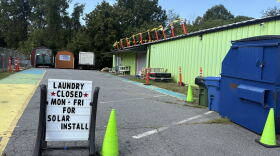 A regional initiative to connect communities to solar microgrids is gaining steam and helping offset power bills.
 -
 The state Senate is scheduled to vote this week to require more public notice for property tax increases. The bill stems from higher tax bills that result from a property revaluation process. Some local governments aren't lowering tax rates when property values increase to create a revenue-neutral rate.
 -
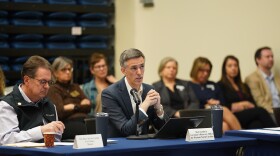 It is still unclear whether Markwayne Mullin will continue Kristi Noem’s policies. He still needs to be confirmed by the Senate before taking over DHS.
 -
 The state has extended the deadline for the Renew NC program to Jan. 31, citing a need to give residents more time during the holiday season.
 -
 In a three-part series exploring chronic absenteeism in the region, WFDD’s Amy Diaz spoke with the school social workers helping students get to class, and above all, recover from the storm.
 -
 In a new three-part series about chronic absenteeism in the region, WFDD’s Amy Diaz explores how schools are addressing the barriers that prevent students from coming to class, starting with a focus on mental health.
 -
 One year after Helene, Asheville’s service industry contends with weaker tourism, fewer jobs and lingering storm trauma, all while trying to keep a happy face for customers.
 -
 Over the last several decades, areas of North Carolina became news deserts where finding local news was difficult, if not impossible. Mostly, that happened in rural areas. During disasters, a lack of news can result in the spread of misinformation, making it harder to get help and increase distrust of those who really do help.


