

A superintendent suspended, reinstated, then fired. Key executives departing. Board chair leaves position. Now, joint financial and oversight investigations by the North Carolina Department of Public Instruction, the FBI and the U.S. Attorney's Office. How did Charlotte-Mecklenburg Schools get here?

Ann Doss Helms
/
WFAE
With cost of diesel fuel hitting records, school districts across North Carolina are reckoning with how they’ll afford to keep buses going.


-
 James Farrell / WFAEA reorganization early this year raises new questions about what’s led to a leadership crisis at CMS and multiple investigations into alleged financial irregularities.
 -
 James Farrell/WFAEAt the now-infamous Sept. 22 Charlotte-Mecklenburg school board meeting, as the board voted to fire Superintendent Crystal Hill, board member Cynthia Stone said she believed the board was “creating our own problems.”


-
 The FBI and U.S. Attorney’s Office confirmed Monday that they’re investigating Charlotte-Mecklenburg Schools, joining state agencies probing the district’s finances.
 -
 Tar Heel basketball legend Michael Jordan's $10 million donation to UNC-Chapel Hill was made in honor of his mother, Deloris P. Jordan.
 -
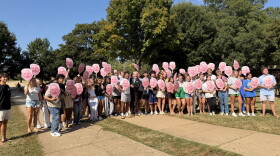 Charlotte-Mecklenburg Schools surprised Myers Park High School Principal Robert Folk on Thursday morning by naming him the district’s 2027 Principal of the Year.
 -
 North Carolina public schools spent more than $6.6 million last school year to repair broken computers. Most don't have a reliable funding source to refresh laptops bought with pandemic-era funds.
 -
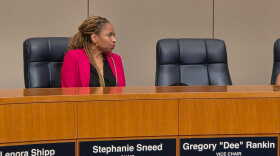 The North Carolina Department of Public Instruction and state Board of Education on Thursday announced a review into Charlotte-Mecklenburg Schools amid the district’s ongoing turmoil.
 -
 Felipe De Brigard, a philosopher and cognitive neuroscientist at Duke University, is among 20 individuals chosen to receive $800,000 from the MacArthur Foundation to advance their work.
 -
 Amid Charlotte-Mecklenburg Schools’ leadership turmoil at last week’s board meeting, a separate financial issue went barely noticed.
 -
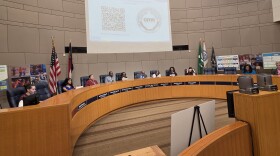 The Charlotte-Mecklenburg school board on Tuesday took the first formal step in its search for a new superintendent, days after the board fired former Superintendent Crystal Hill in a contentious 5-4 vote.
 -
 Chasity Dolan, chief of staff for Charlotte-Mecklenburg Schools, has announced her retirement from the district, becoming the latest top official to depart amid the district’s ongoing leadership turmoil.
 -
 Parents who want to take their children out of a transgender teacher's class at a Wake County elementary school say they weren't given the option — and they're arguing it's their right. They cite recent Supreme Court decisions.


