
Scientists have voted to change how the world keeps time, but most people won't even notice. NPR's Scott Simon talks to Philippe Richard, director of Switzerland's Federal Institute of Metrology.
-
It's called a Kelvin wave, and it's driven by El Niño.
-
President Trump, famous for stripping protections from national monuments, is signing a bill to turn one into a national park. The land in southern Arizona is biologically rich and scenic.
-
Public enthusiasm for saunas has taken off in recent years, spurred by the COVID-19 pandemic and the growth of the wellness industry.
-
A new report from ProPublica shows how the town and first responders were unprepared for the deadly 2025 flood.
-
 The cost of having a baby is difficult to predict. The amount families pay varies widely. Here are five tips to help you prepare for the often unexpected costs of pregnancy and giving birth.
 -
 The U.S. is the only major economy where planet-warming pollution dramatically increased last year. The United Nations warns the planet is on track for catastrophic warming.
 -
Two people — an eco-evangelist and an engineer — are taking different approaches to support the same critical ingredient in the Chesapeake Bay: oysters.
-
We journey with a hiker as he records the sounds of 2,600 miles of wilderness on the Pacific Crest Trail.
-
Historic drought had western states entering summer anxious about wildfires. Some suffered significant destruction and death, but there were wins, too.
-
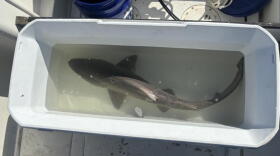 Boston Harbor used to be one of America's dirtiest ports. But after decades of cleanup efforts, plenty of marine life, including sharks, call it home.
 -
 A large underwater wave moved up the West Coast, raising sea levels. Scientists say it's driven by El Niño and it's going to happen again.
 -
James Olthoff, a delegate to the International Bureau of Weights and Measures, talks to NPR's Joel Rose about why it's important to accurately measure time on the moon.


