

Jennifer Adler
Sunflower sea stars are critically endangered in the Pacific Ocean. University of Washington researchers are working with the Samish Indian Nation to bring this 24-armed creature back from the brink of extinction.

-
 Peter O'Dowd/Here & NowOfficials in Alaska are warning that ice melt from a glacier high above the capital of Juneau could pose a threat to homes and businesses in the inundation zone.
 -
 Christian Hartmann/ReutersMillions of people in Europe stepped outside Wednesday to watch a spectacular sunset with a solar eclipse. The path of totality passed through portions of Greenland, Iceland, Spain and Portugal.


-
The Environmental Protection Agency spent millions of dollars cleaning up a massive residential lead superfund site in Omaha, Nebraska, starting in 1999.
-
 The Phoenix Species Project promises sustained support for dozens of localized efforts tailored to the needs of each species.
 -
The Environmental Protection Agency issued rules earlier this year for one controversial herbicide that can be prone to drifting and harming some other crops and trees.
-
 Find out the best ways to view the peak of Wednesday night’s Perseid meteor shower from across almost the entire Northern Hemisphere.
 -
"Snow eaters" are a new category of heat wave, marked by unseasonably warm weather that strips mountains of their snowpack.
-
 Federal efforts to revive uranium mining in the West and decrease reliance on Russian uranium raise concerns about drinking water for tribal communities reckoning with the industry's deadly legacy.
 -
For the first time, researchers have used artificial intelligence to generate novel viruses in a laboratory setting, according to a paper in the journal Science.
-
 A powerful 7.4-magnitude earthquake shook dozens of cities and towns in Colombia on Monday.
 -
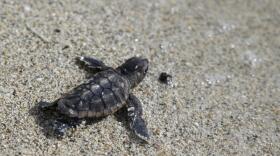 Loggerhead turtles are having a record nesting season in the U.S., but not so much in other parts of the world.
 -
Our brains aren’t wired to like the uncertainty that comes with change.


