-
 This week, our Fact Check looks at the state Senate leader’s apparent flip on a suspension of the state’s gas tax, which Gov. Josh Stein signed into law Friday. Earlier this year, Republican Phil Berger indicated he was against a suspension as a way to offset high fuel prices. Last week, though, he led the charge to do just that.
 -
 Charlotte Mayor Vi Lyles announces her resignation, the state Senate votes to pause property tax assessments for a year, Wake County delays a vote on the merger of Atrium Health with WakeMed, and the PGA is back in town.
 -
 Berger's proposal comes as the General Assembly grapples with rising property tax bills across the state.
 -
 The North Carolina General Assembly’s short session is underway, with lawmakers focused on several issues. One is the budget. The state has not had a comprehensive budget since 2023 and teacher and state employee pay raises are awaiting passage. An extension of Medicaid funding has just passed, but now there’s a new question: whether to cap property taxes.
 -
 Phil Berger has conceded. The most powerful politician in North Carolina, after several recounts and election protests, has admitted defeat to his primary challenger, Sheriff Sam Page. Berger has dominated state politics for well over a decade, shaping both policy and power. Now, there’s a political power vacuum.
 -
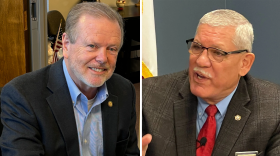 The recount involved ballots from three precincts across the district. Berger needed to gain two votes to trigger a full recount. He did not.
 -
 Berger says there are several "overvotes" and hundreds of "undervotes" in Senate District 26 election, asks elections board members to visually check those ballots.
 -
 Berger, North Carolina's longtime state Senate leader, trails by 23 votes after the county canvass. His campaign says some voters in Guilford County who should have had that senate district on their ballots swear they did not.
 -
 A study reveals several parks and greenways would be impacted by the proposed I-77 toll lanes, the former EpiCentre uptown is set to go up for sale, Sam Page widens his lead over North Carolina Senate leader Phil Berger, and Queens University Men’s basketball is going to the Big Dance.
 -
 More than a year into his term, North Carolina State Auditor Dave Boliek says he’s working to eliminate waste, fraud and abuse in state government. New laws have expanded the auditor’s investigative powers and even given the office a role in shaping election oversight. Boliek joins to discuss his approach to accountability, his growing authority and what it could mean for transparency and governance in North Carolina.

© 2026 WFAE
Mailing Address:
WFAE 90.7
P.O. Box 896890
Charlotte, NC 28289-6890
Tax ID: 56-1803808
Mailing Address:
WFAE 90.7
P.O. Box 896890
Charlotte, NC 28289-6890
Tax ID: 56-1803808
90.7 Charlotte 93.7 Southern Pines
90.3 Hickory 106.1 Laurinburg
Play Live Radio
Next Up:
0:00
0:00
Available On Air Stations


