

As a child, Christian Dale used to run from bees.
“I remember playing on a soccer field and taking off as soon as a bumblebee came near,” he said. “I was terrified.”
Now, the UNC Chapel Hill senior spends time suited up at beehives, calmly handling frames filled with buzzing insects. Learning how bees behave, he said, changed everything. “Once I understood how gentle they really are, it helped me connect with nature in a way I never would have before.”
His beekeeping experience reflects a broader shift happening across North Carolina and beyond: Pollinators are under growing pressure, and how people understand and support them matters more than ever. From food production to ecosystem health, bees play a critical role — even as scientists warn that many species are in decline.
Dale is one of the student officers of UNC Chapel Hill’s Carolina Beekeeping Club, an organization that has helped students build those connections since 2016. Now 200 members strong, the club offers hands-on experience with bees while providing a way to reduce stress, spend time outdoors, and support pollination and healthy ecosystems — even for students who never plan to keep hives themselves.
But scientists say understanding bees also starts with recognizing that not all of them face the same risks.
Vital contributors to a healthy diet
North Carolina is home to more than 500 species of native bees, most of which live solitary lives in the wild, said N.C. State University Professor and Extension Specialist David Tarpy.
That makes them very different from honeybees, which are not native to the United States and are managed by beekeepers in large colonies.
“About 55 percent of managed honeybee colonies died off last year,” Tarpy said. “But because they are owned by beekeepers, beekeepers can grow them back, so honeybees are not at risk of going extinct.”
Bees are just one part of a larger pollinator community. North Carolina is also home to butterflies, moths and hummingbirds. In fact, the Tar Heel State has more than 175 native butterfly species, according to N.C. State University’s Plants for Human Health Institute.
But when it comes to pollinating food crops, bees play an especially important role. Insect pollination services add more than $34 billion in economic value to U.S. agricultural crops each year. According to the U.S. Fish and Wildlife Service, they support the production of fruits, nuts and vegetables, vital components to a healthy diet. Honeybees, though not native to the United States, account for up to $5.4 billion of that agricultural productivity.
“When it comes to native bees, that’s where the general public can really play a role,” Tarpy said. “Planting [even] a small plot of flowering plants can make a difference for an individual carpenter bee or other native species.”

Helping honeybees, however, requires action on a much larger scale. “We need to conserve forests. We need landscapes — acres and acres — of flowering plants,” Tarpy said. “Each individual homeowner can help pollinators in general. But if they want to help honeybees, they need to support honeybee scientists, support beekeepers and buy local honey.”
Pollinators and food production
Bees are not responsible for pollinating the world’s major staple crops — the rice, corn and wheat that provide most of the global calorie supply. Instead, bee pollination plays a crucial role in improving diet quality by supporting the production of fruits, vegetables, nuts and seeds that add nutrients, flavor and variety to what people eat, according to the National Institutes of Health.
Some crops, like watermelons, squash and cucumbers, depend entirely on bees to produce fruit, while others, including almonds, blueberries and oranges, produce higher yields and better-quality fruit when bees are around. Bee pollination indirectly supports meat, dairy and egg production because livestock rely on alfalfa, a crop that depends on pollinators for seed.
Bees feed exclusively on plant-based food sources, collecting nectar and pollen. Honeybees live in colonies that can house as many as 50,000 bees, and thousands of them fly miles from the hive each day to gather food. This gives them an enormous ecological footprint as they pollinate plants across the landscape, Tarpy said.
“About half of [the colony] venture out to bring home the groceries and feed everybody else, and they can fly upwards of three miles away. A single honey bee can cover about 50 square miles,” he said. Tarpy noted that this range reflects how far bees can travel and how broadly their daily foraging patterns extend across surrounding fields, forests and neighborhoods. It’s their efforts that allow many plants to reproduce and sustain healthy ecosystems.
How people help bees, however, depends on which bees they are trying to support: Honeybees benefit from research, beekeeping and hive management, while native pollinators depend more on protecting and restoring natural landscapes, Tarpy said.
‘Giving back’
For students in the beekeeping club, those broader ecological benefits are not always the main reason they join. Since 2016, the club has offered students a way to reduce stress and build connections with nature and with one another. Supporting pollination and healthy local ecosystems and learning simple ways to help pollinators — even without keeping bees — is an added bonus, according to a university spokesperson.
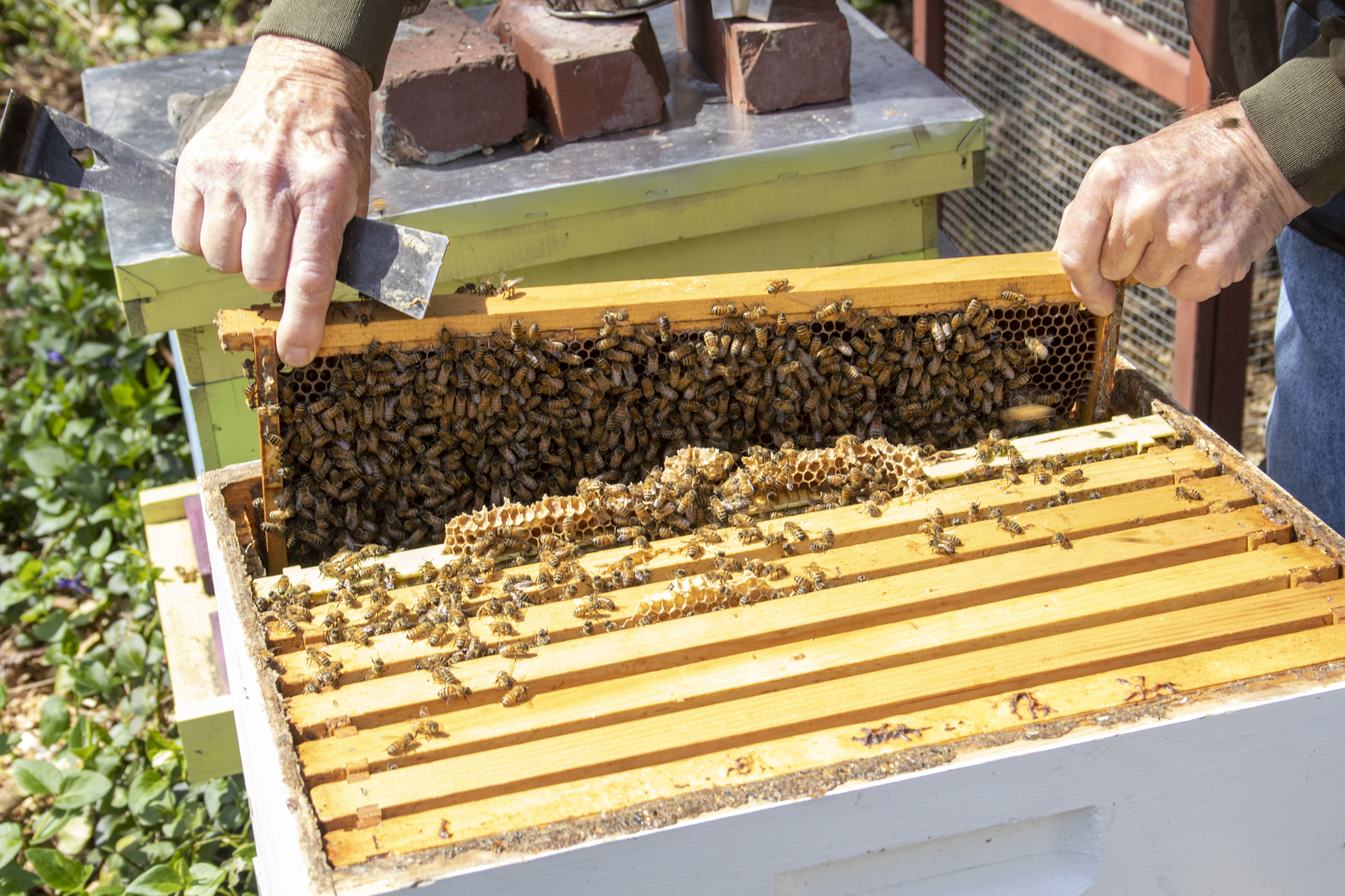
UNC junior and club officer Ben Diasio said the club gives students a rare, hands-on way to see complex biological systems in action. Watching bees work together on a single frame, he said, makes abstract ideas from biology tangible, showing how thousands of individuals perform different roles to keep a living system functioning.
The club has found other ways to support students.
“We sold our honey last year to support Carolina Cupboard, which is a UNC student food pantry,” Diasio said. “We raised about $5,000, which was surprising, because we weren’t expecting to harvest much honey at all. It’s a great way to give back and be more than just a beekeeping club.”
Getting involved
For UNC Chapel Hill students interested in learning more about becoming beekeepers, Diasio said his excitement began with a hive tour.
“On a hive tour, you get to wear a bee suit and pass around frames of bees,” he said. “You can hold the honeycomb and watch the bees crawling around.For me, it’s a wonderful, chaotic, beautiful thing.”
Students can keep up with the Carolina Beekeeping Club by visiting its Instagram page.
For nonstudents interested in beekeeping, the North Carolina State Beekeepers Association offers information on local chapters, training programs and bee schools through its website.
For gardeners hoping to turn a New Year’s resolution into action, supporting native bees and other pollinators can begin at home. Without keeping hives, they can still make a difference by planting pollinator-friendly landscapes. The North Carolina Wildlife Federation provides lists of native trees, shrubs and flowers that create these habitats, including perennial flowers such as black-eyed Susans and butterfly weed, trees like eastern redbud and vines such as coral honeysuckle.
Creating a pollinator garden also means thinking about long-term care. Many common lawn and garden chemicals are linked to bee declines, as are habitat loss, parasites and climate change. For gardeners who rely on pesticides to control weeds and pests, Tarpy said timing matters.
“Apply [chemicals] at sunset,” he said. “The bees aren’t going to be flying at night, and the toxin and the pesticide will break down by the morning — you really can have your cake and eat it too.”
Tarpy also recommends choosing plants that bloom at different times of year, from early spring through fall. That approach keeps gardens colorful while providing a steady, extended food source for pollinators throughout the growing season.
This article first appeared on North Carolina Health News and is republished here under a Creative Commons Attribution-NoDerivatives 4.0 International License.