

Charlotte Talks With Mike Collins
MON-FRI • 9AM-10AM / 8PM-9PM | SAT • 7AM-8AM

Launched in April 1998, Charlotte Talks with Mike Collins has become the region's exclusive forum for the discussion of politics, growth, the arts, culture, social issues, literature, human interest, the environment and more. If something is of interest to the Charlotte region, listeners and leaders know the topic is bound to be discussed on Charlotte Talks. Learn more about Charlotte Talks.
Subscribe to the podcast:
Apple Podcasts NPR One Google Spotify Stitcher RadioPublic Pandora RSS
Latest Episodes
-
 Early voting is underway and people are lining up to cast their ballots in the midterms. Election officials have been fighting a barrage of mis- and disinformation, but despite their efforts, the attacks continue, and some voters are concerned. A closer look at the integrity of our elections.
 -
 While sports betting has been debated in North Carolina for years, bets on the midterm elections are raising new concerns about prediction markets. We discuss the ethics of election prediction markets, whether they constitute gambling or a new financial avenue and potential regulatory measures.
 -
 Charlotte is experiencing a bookstore boom, despite rates of reading for pleasure being down nationally. We explore the impact of AI use, social media and more on traditional literacy.
 -
 Charlotte City Council hears from the public about a proposal to extend the ban on new data centers, six CMPD Officers are at risk of being fired in the wake of racist text messages, and weeks after CMS Superintendent Crystal Hill is fired, parents and others have the chance to sound off to the school board about that decision. Those stories and more with our roundtable of reporters.
 -
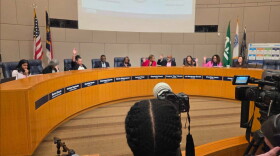 Leadership changes and questions about how Charlotte-Mecklenburg Schools is governed have raised public concerns. We unpack the latest developments and explain what we know — and what we still don’t.
 -
 Flashback to 2024. Republicans hammered Democrats on affordability. Now, it’s the Democrats’ turn. Two years ago, Democrats pushed social issues like abortion rights and democracy and lost. This year, Republicans are on the defensive about the cost of living and are talking about crime and transgender athletes. It’s a flip-flop of strategies by both parties, and the question is: Will it work the same way?
 -
 As Election Day for the midterms inches closer, the polling industry across the country is focused on getting accurate predictions about what will happen on Nov. 3. In recent years, midterm election polling has proven to be more accurate than presidential election polling. We discuss polling methodology, margin of error, how to interpret poll results and more.
 -
 Fewer than 6% of American physicians identify as Black, but census data show roughly 12% of the U.S. population is Black. Some experts say that disparity is one reason communities of color tend to experience worse health outcomes in the U.S., including higher rates of high blood pressure, shorter life expectancy and higher risks during childbirth. A new book from a former ProPublica reporter links today’s inequalities to a long history of structural racism — part of which runs through North Carolina.
 -
 The FBI launches an investigation into CMS. The county might wait on the outcome of the several probes being conducted before it asks its own questions. But the county is asking questions about why Discovery Place can’t repay a $14 million loan. The General Assembly is set to consider suspending the gasoline tax, and PTL’s Jim Bakker dies. Those stories and more with our roundtable of reporters.
 -
 The Civil War was the deadliest conflict in American history. Yet more than 160 years later, its legacy is still being written, and one historian argues a key part of that legacy involves free people of color. At the beginning of the war, nearly half a million people of color were free, and he says their stories ultimately helped lay the groundwork for a more expansive vision of American freedom.


